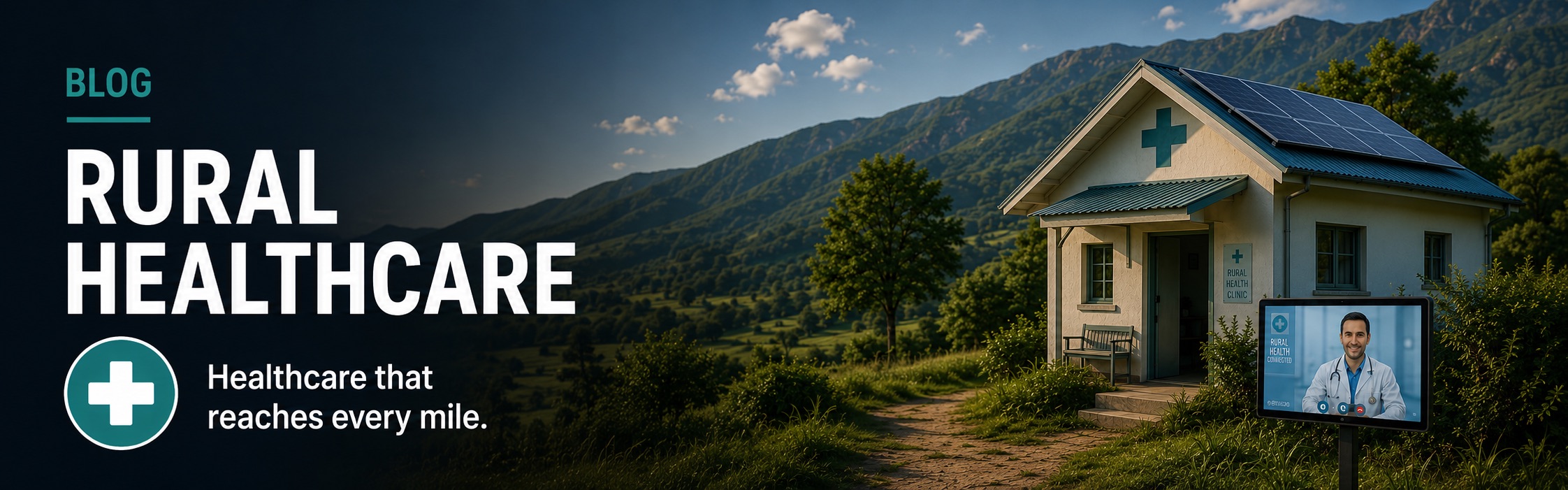
The engagement layer around regulated Remote Patient Monitoring (RPM) is crucial for capturing patient behavior, thereby improving adherence and providing richer clinical insights . This layer, distinct from regulated RPM devices, offers a more comprehensive view of a patient's health journey, particularly vital in rural healthcare settings where resources and connectivity can be challenging.
The Critical Role of Engagement in Rural RPM
Regulated RPM programs, utilizing FDA-cleared devices like weight scales, blood pressure cuffs, and pulse oximeters, provide essential physiological data [1]. However, these devices often capture only episodic measurements, leaving gaps in understanding patient adherence and real-world activity . This is where the engagement layer, exemplified by solutions like QStat, becomes indispensable . It provides continuous, ambient context that complements regulated RPM data, offering a holistic view of patient behavior and adherence patterns .
Rural healthcare systems face significant structural challenges, including hospital closures, expanding maternal-care deserts, and constraints in managing chronic diseases due to clinician shortages and transportation barriers. Intermittent broadband and limited diagnostic infrastructure further complicate care delivery. Federally Qualified Health Centers (FQHCs), Indian Health Service (IHS) facilities, tribal health systems, and mission hospitals often operate with these limitations. The federal policy landscape is evolving, with initiatives like the Broadband Equity, Access, and Deployment (BEAD) program aiming to improve rural connectivity [2].
Quantifiable Business Drivers for Enhanced Engagement
Investing in an engagement layer around RPM is driven by several critical business factors:
- Reduced Hospital Readmissions: Heart failure readmissions alone cost Medicare an estimated $13.5 billion annually [2]. By identifying patients whose adherence is dropping or whose activity patterns are changing, the engagement layer enables proactive intervention, supporting re-admission prevention workflows and potentially reducing these significant costs.
- Growing RPM Market: The global remote patient monitoring market size was valued at $53.6 billion in 2023 and is projected to grow at a compound annual growth rate (CAGR) of 19.7% from 2024 to 2030 [1]. This substantial growth underscores the increasing adoption of RPM, making the enhancement of its effectiveness through engagement a strategic imperative.
- Improved Patient Safety and Outcomes: Enhanced patient engagement directly correlates with better adherence to treatment plans, leading to improved health outcomes and patient safety [2]. For instance, better adherence to medication and activity guidelines can prevent adverse events, which can incur significant cost-per-incident in emergency care and extended hospital stays [3]. While specific cost-per-incident data for non-adherence varies widely, preventable hospitalizations due to chronic conditions cost the U.S. healthcare system billions annually [4].
The Technical Architecture of the Engagement Layer
An effective engagement layer requires a robust, resilient, and intelligent infrastructure. Rajant Health's approach integrates several key components to deliver this capability, particularly suited for the challenging environments of rural healthcare.
QStat: The Multi-Modal Biosensor Hub
QStat serves as a multi-modal wearable biosensor hub, capturing ambient activity and engagement metrics. It is crucial to understand that QStat is not a regulated medical device. Its data does not satisfy CMS RPM CPT codes (99453, 99454, 99457, 99458) or RTM codes (98975 and related) which require FDA-cleared device data [1]. Instead, QStat data complements regulated RPM devices (like BP cuffs, glucometers, pulse oximeters, weight scales) by adding adherence, activity, and engagement context.
QStat collects continuous data streams related to patient activity, sleep patterns, and other behavioral indicators. This continuous stream provides a richer signal of how the patient is actually living between episodic regulated RPM readings, without making any clinical determination. For example, a sudden decrease in daily steps or a significant change in sleep duration, detected by QStat, can signal a potential decline before it escalates to an emergency, prompting care team attention.
Resilient Connectivity with Kinetic Mesh® and Cowbell
Reliable data transport is paramount, especially in rural areas where wired broadband is intermittent and cellular coverage is patchy. Rajant's Kinetic Mesh® network, powered by BreadCrumb® nodes like the DX5 Finch, provides resilient transport at the facility and across multi-site rural networks.
Cowbell hardware extends this resilient connectivity to clinics, satellite sites, and even patient homes. For instance, an EdgeCrumb can be deployed at a clinic, while lighter footprint Cowbell nodes can be used in patient homes depending on the specific use case. This mesh-resilient infrastructure ensures that data, including QStat and regulated RPM data, can flow reliably to care teams, even in challenging environments. Cowbell kiosks, strategically placed at community hubs like grocery stores or churches, can also facilitate community data upload, allowing patients to upload regulated-RPM device data and connect with their care team.
Conclusion
The engagement layer around regulated RPM, exemplified by solutions like QStat, is not merely an add-on; it's a critical component for understanding and influencing patient behavior in rural healthcare. By layering engagement and ambient-context telemetry alongside regulated RPM devices, care teams gain a richer, more actionable picture of patient health. This comprehensive approach supports re-admission prevention, improves patient adherence, and ultimately enhances the quality and efficiency of care delivery in underserved rural communities.
Operational footprint
On the ground, the engagement layer above regulated RPM looks like a thin behavioural-telemetry channel — adherence signals, app interactions, between-visit symptom check-ins — running on QStat hardware over the rural clinic's existing connectivity, with Cowbell mediating which signals cross into the CPT-coded RPM record and which stay in the operational engagement bucket [1]. The HHS billing guidance is the load-bearing reference: 99453, 99454, the new shorter-cadence codes in the 2026 fee schedule, and the device-supplied-data thresholds that determine which engagement events count as the "16 days of data" the existing 99454 still requires [3]. The split is enforced at routing time so the engagement signal can be richer than the billable one without contaminating the record.
What the audit posture looks like
The HHS Office of Inspector General's 2025 report on Medicare RPM billing is a useful sharpening lens for any rural deployment: it flags the boundary between properly-coded RPM device data (CPT 99453/99454/99457/99458 with FDA-cleared device data) and engagement-layer data that does not meet the device-supplied-data threshold the codes assume [3]. A working deployment enforces that split at the Cowbell routing manifest, not at a downstream billing review — engagement signals (adherence, activity, app interactions) flow to the care-coordination dashboard, regulated-RPM device data flows to the EHR with the device-supplied-data audit trail the codes require, and the two streams never cross-contaminate [1]. That manifest-level separation is what makes the engagement layer defensible under audit while still being clinically useful between visits.
Take the next step
Ready to evaluate this stack on your own footprint? Apply to the Early Adopter Program →
References
Grounded on internal Rajant Health and Rajant Corporation documentation.
- [1] U.S. Department of Health and Human Services. Billing for remote patient monitoring. HHS Telehealth, 2025. https://telehealth.hhs.gov/providers/best-practice-guides/telehealth-and-remote-patient-monitoring/billing-remote-patient ↩
- [2] National Rural Health Association. What Medicare's 2026 proposed rule signals for remote care. NRHA, 2025. https://www.ruralhealth.us/blogs/2025/08/what-medicare%E2%80%99s-2026-proposed-rule-signals-for-remote-care ↩
- [3] HHS Office of Inspector General. Billing for Remote Patient Monitoring in Medicare. HHS OIG, 2025. https://oig.hhs.gov/reports/all/2025/billing-for-remote-patient-monitoring/ ↩
- [4] Healthcare Business Today. Rural Health Funding Creates Remote Care Opportunity. Healthcare Business Today, 2025. https://www.healthcarebusinesstoday.com/rural-health-transformation-remote-care-opportunity/ ↩